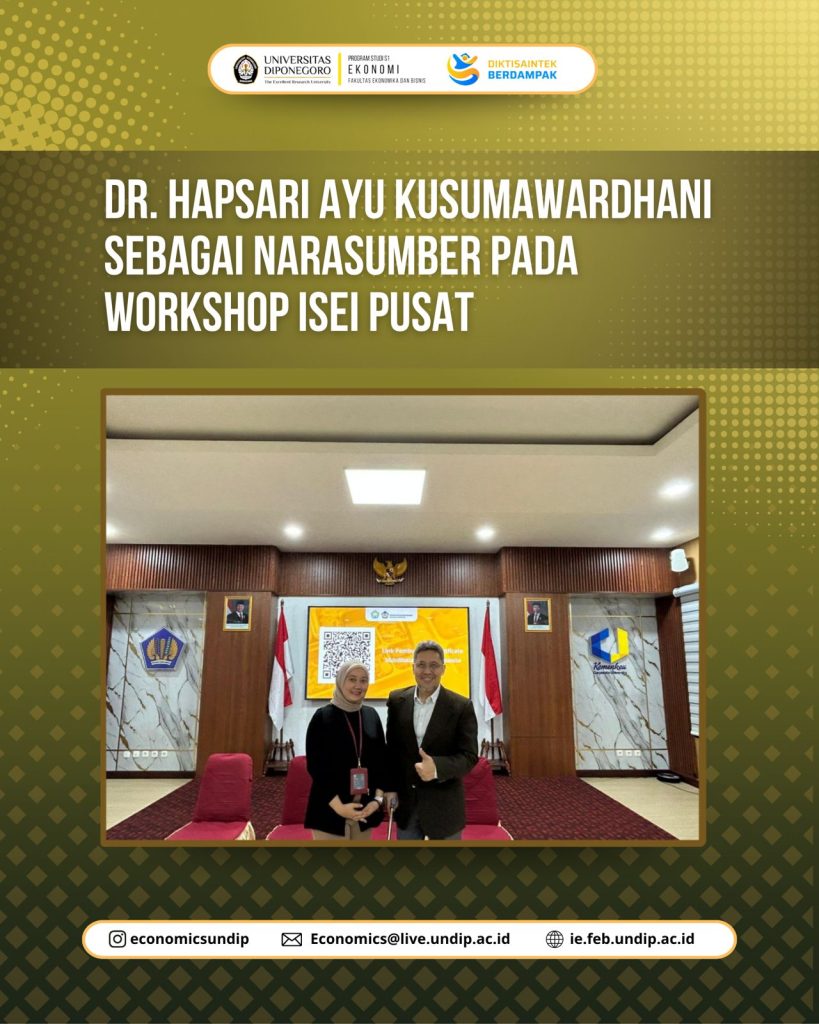
Located at the Financial Education and Training Agency of the Ministry of Finance of the Republic of Indonesia, the workshop held by the Central Indonesian Economics Bachelor Association (ISEI) became an important event for the dissemination of public policy research results, especially related to the implementation of the MBG program in Indonesia. In the academic forum, Hapsari Ayu Kusumawardhani who is a lecturer in the Economic Study Program at Diponegoro University was present as the main speaker and presented the results of collaborative research with ISEI. This activity was attended by various stakeholders, ranging from researchers, academics, to representatives of government agencies.
Research conducted by the ISEI team with Dr. Hapsari focuses on the implications of the MBG program in three provinces in Indonesia. This research highlights how the implementation of the program runs at the school level by involving teachers and students as the main actors. The research process is carried out comprehensively, starting from secondary data collection, supplemented with primary field data, to in-depth interviews. In addition, a comparative analysis between regions is also carried out to identify implementation variations and challenges faced in each region.
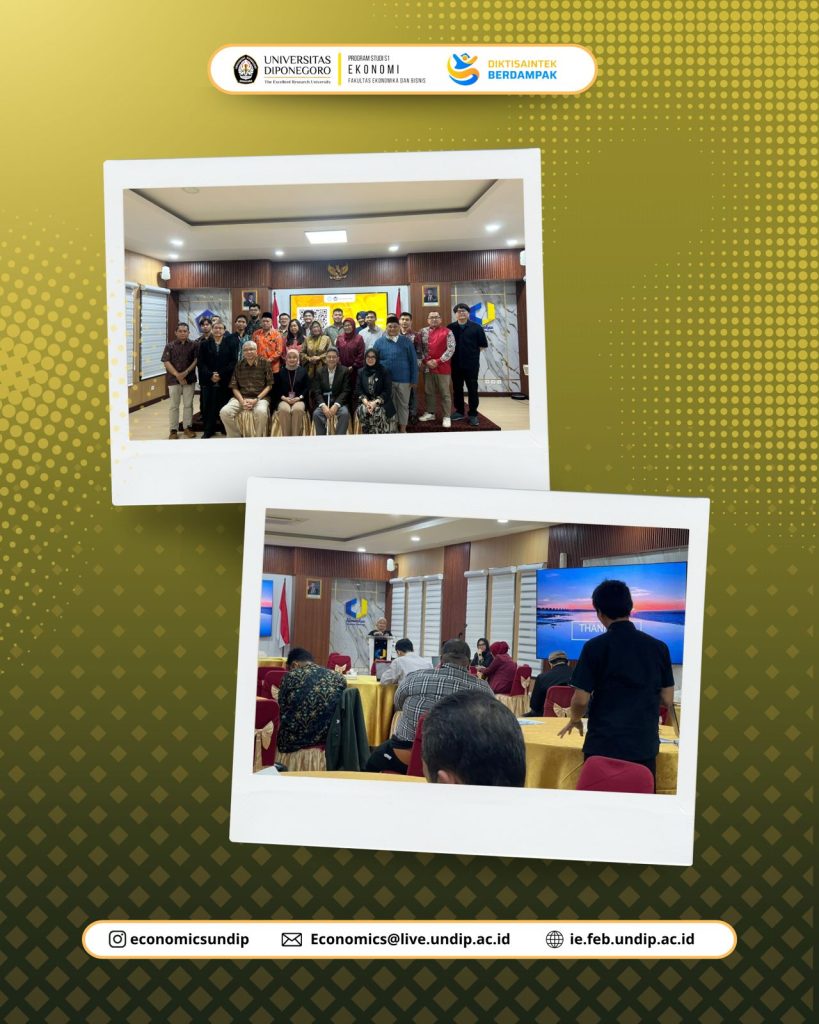
The workshop was opened by Hermanto Siregar as the Head of Academic Development and Research of PP ISEI, who emphasized the importance of methodological innovation in policy economic research. In his speech, he highlighted the need for an adaptive research approach to evaluate the effectiveness of government programs in the regions. Furthermore, Bambang Juli Istanto as the Secretary of BPPK Ministry of Finance of the Republic of Indonesia emphasized that collaboration between academics and the government is the key to strengthening the quality of public policy analysis, especially in producing evidence-based recommendations.
At the main session of the workshop, Dr. Hapsari explained the methodological approach used in the research as well as the initial findings related to the implementation of the MBG program in schools. This presentation provides an overview of various challenges in the field as well as opportunities for policy improvement in the future. The results of this research are expected to be a strategic input for the government in formulating more effective, adaptive, and targeted policies, especially in improving the quality of the implementation of the MBG program in various regions.
The activity was closed with a joint photo session and breaking the fast together as a symbol of strengthening the academic network across institutions. Through this activity, it is hoped that the synergy between academics, government, and researchers will be stronger in supporting research-based development. The spirit of collaboration and real contribution like this is a reminder that big changes start from small consistent steps—keep working, innovating, and benefiting the wider community.