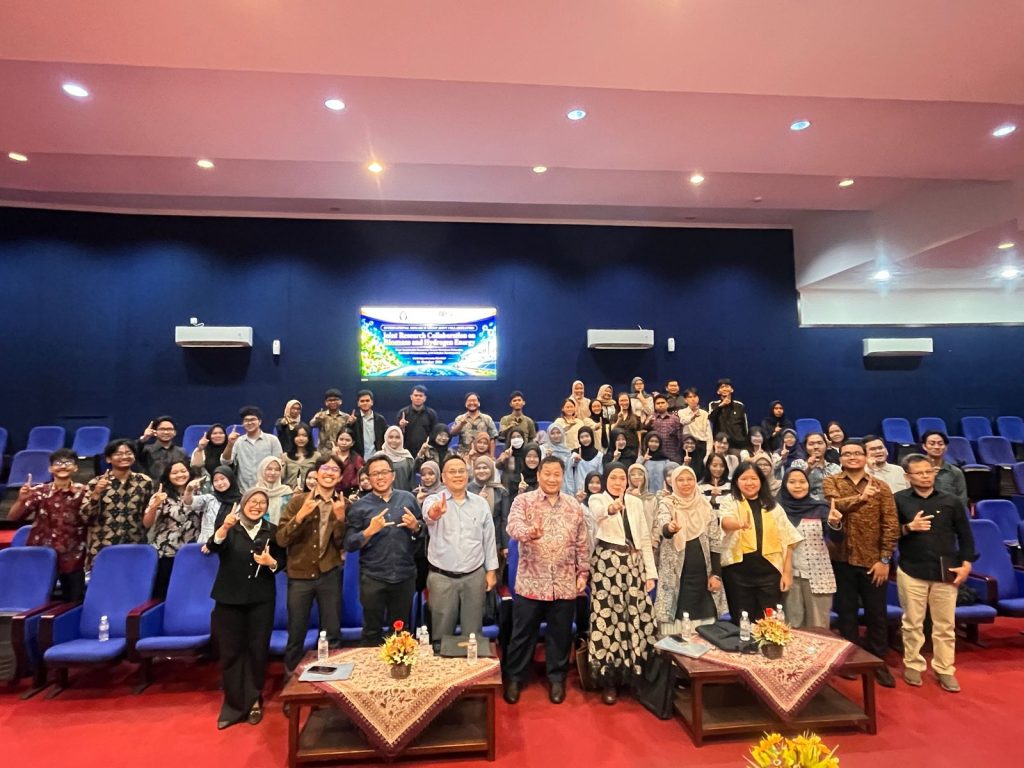
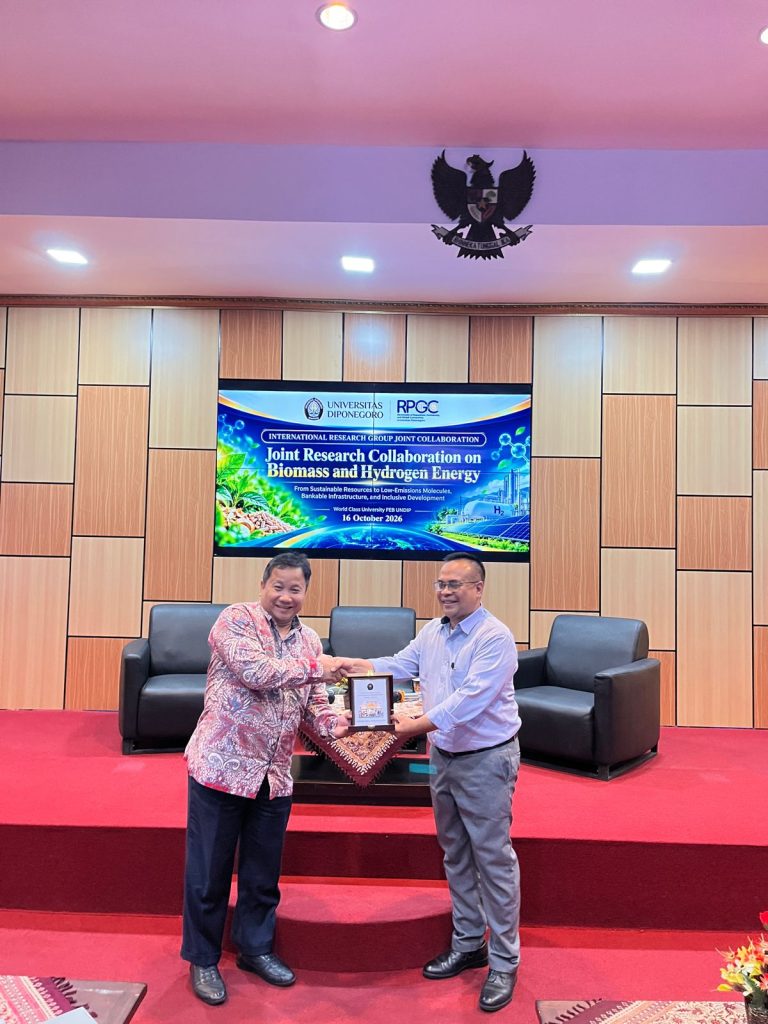
Semarang, October 16, 2026 — The Faculty of Economics and Business of Diponegoro University (FEB UNDIP) encourages the strengthening of international research collaboration in the field of biomass and hydrogen energy through the International Research Group Joint Collaboration (IRGJC) program. This program is designed to integrate technology, economy, policy, and environmental studies to support sustainable energy development in Indonesia and the ASEAN region.
This IRGJC activity with the theme of Biomass and Hydrogen Energy is coordinated by FEB UNDIP through Dr. Jaka Aminata, S.E., M.A. Based on the agenda listed in the Terms of Reference (TOR), the speaker’s presentation session is planned to take place at 13.30–16.17 Western Indonesia Time. The core activity period is scheduled for October 16–30, 2026, while the location of the session has not been listed for sure in the document.
This program is designed to involve academics, researchers, government, and industrial sectors, including Universiti Teknologi PETRONAS (UTP) Malaysia, Bappenas, Asahi KASEI Japan, and PT Awina Sinergi International. The involvement of the institution still requires official confirmation according to the provisions in the TOR.
This collaboration is based on the need for a reliable, low-emission energy system, and able to support industrial competitiveness and public welfare. Biomass and hydrogen are considered to have the potential to support energy transition. However, its development requires a comprehensive study of the availability of raw materials, technology efficiency, infrastructure needs, economic feasibility, and environmental impact.
Through workshops, technical discussions, and joint research preparation, this program targets the formation of a structured research group and the strengthening of international academic cooperation. The research agenda includes sustainable biomass systems, raw material supply chains, emissions throughout the life cycle, economic feasibility, low-emission hydrogen production lines, and energy policy implications.
In addition, IRGJC targets the development of two collaborative scientific articles to be submitted to the reputable journal indexed by Scopus during 2026. This program is also directed to open up research opportunities for graduate students, joint supervision, and the development of long-term research agendas.
Through this initiative, FEB UNDIP seeks to strengthen the contribution of economic science and policy analysis in sustainable energy development. The synergy between universities, government, and industry is expected to produce evidence-based studies that support decision-making and development of biomass energy and hydrogen in Indonesia and ASEAN.