By Messal Bakti Purnama
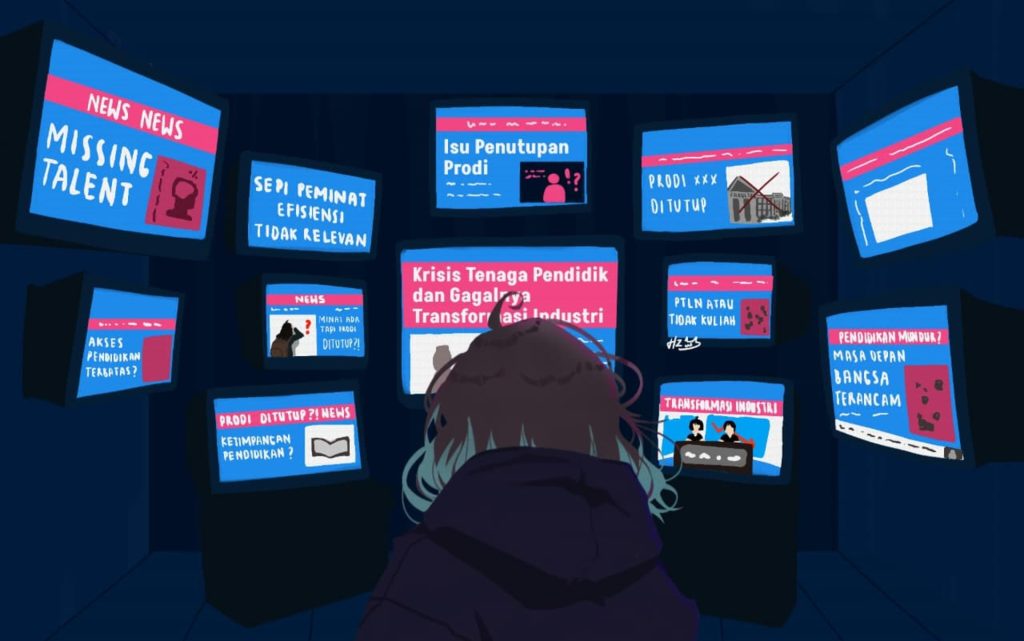
Closing the study program will not create a single new job. That is what has escaped the Ministry of Higher Education, Science, and Technology (Kemendiktisaintek) to close or carry out a moratorium on higher education study programs that are considered irrelevant to the needs of the industry—a discourse that is now triggering public debate. This policy arises from the government’s claims regarding the phenomenon of oversupply in certain graduates, such as the teacher training study program which produces up to 490 thousand bachelors per year, far exceeding the absorption capacity of only 20 thousand workers. In addition, credential inflation is also claimed by the government to occur in the D3 Midwifery and Accounting study program, which has experienced a decrease in interest due to the demand for qualifications in the job market. The assumption that educated unemployment is caused by a lack of relevance to the industry is a conclusion that oversimplifies the problem. In fact, the structural complexity of the labor market and the slow transformation of the national economy are the real root of this problem.
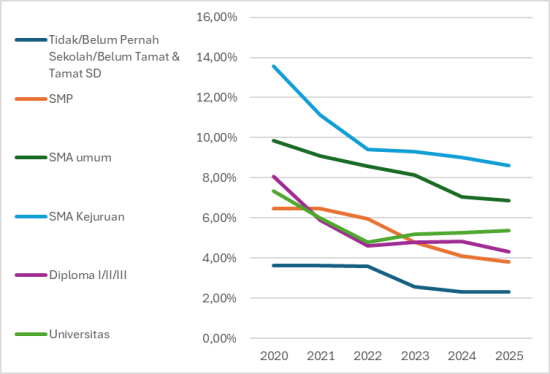
Open Unemployment Rate by Education Level (%)
2020-2025
Source : BPS, processed
Statistically, the data actually shows that the problem is much more complex than just the relevance of the study program. A report by the Central Statistics Agency (BPS) in 2025 noted that the Open Unemployment Rate (TPT) for the university level has continued to creep up since post-pandemic (2022) to reach 5.39 percent. Meanwhile, TPT at other education levels continued to decline in the same period. More deeply, BPS data reveals that 35.36 percent of youth in Indonesia are trapped in the phenomenon of vertical mismatch. Of this figure, 22.36 percent of them are overeducated, namely they occupy job positions whose qualification requirements are far below the college diploma they have, while the rest are in the undereducated category. On the other hand, a study by the Institute for Community Economic Research (LPEM) FEB UI in 2025 found that as many as 45 thousand undergraduate graduates are in the category of desperately looking for work (discouraged worker), driven by unmet wage expectations, mismatches between fields of study and job opportunities, and age discrimination in the recruitment process in the job market. These figures are not a reflection of the failure of the campus curriculum alone, but rather a signal of a structural mismatch between the expansion of higher education and the capacity of the job market to absorb it.
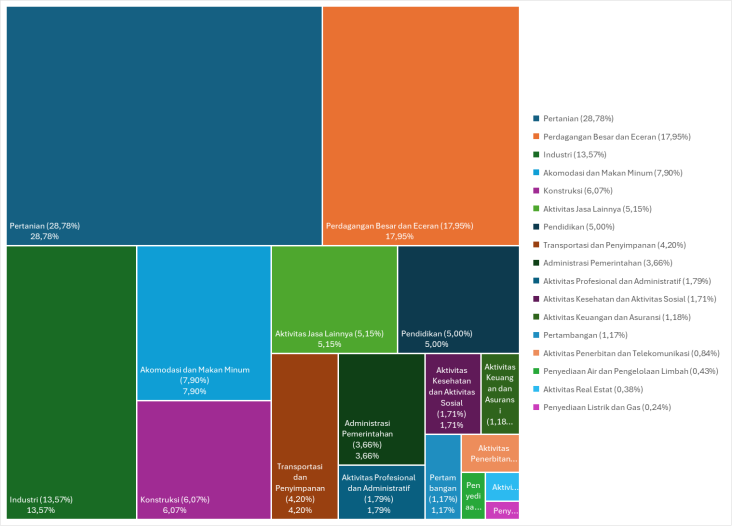
Percentage of Population Working by Business Field (February 2026)
Source : BPS, processed
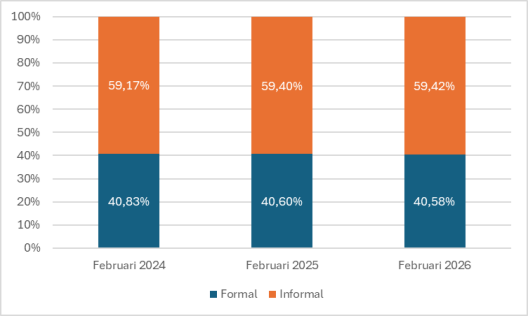
The high mismatch and overeducation are rooted in the structure of the Indonesian labor market which is still experiencing sectoral dualism. As stated by Dumairy—which is still relevant today—the manufacturing sector is the main driving force of the economy, but the agricultural sector is still the main absorber of labor at 28.78 percent of the total workers in Indonesia. In fact, the average salary of employees in the agricultural sector is only IDR 2.5 million, far below the expectations of the wage (reserve wage) of higher education graduates. Therefore, it can be seen that the massive expansion of higher education graduates in the last decade has not been offset by industrial transformation to create adequate middle-skill to high-skill jobs. As a result, employment growth is still dominated by the micro-scale informal sector with low productivity. Instead of being absorbed into the high-value-added, technology-based formal sector, fresh graduatesare forced to compete in a tight job market, and end up accepting any job under their academic degree, a trap that simply closes the classroom.
Percentage of the population working according to formal/informal activities
(February 2024-February 2026)
Source : BPS, processed
If the root of the problem lies on the demand side of labor, then punishing the supply side—i.e., educational institutions—is the wrong policy response. The plan to close the study program, if carried out without comprehensive consideration, risks eroding the fundamental function of higher education itself. Universities are not just a workforce training institution that is only tasked with meeting the needs of short-term industries. Higher education institutions bear a much more important obligation, namely organizing Education and Teaching, Research and Development, and Community Service within the framework of the Tri Dharma of Higher Education.
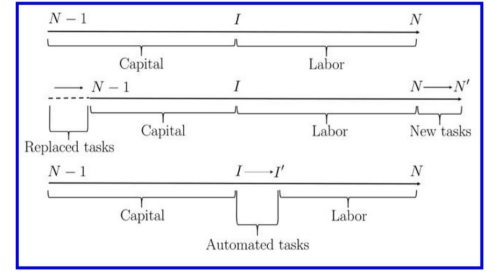
In the era of industrial volatility towards 5.0, forcing the campus to submit completely to the needs of the industry today is very dangerous. Employment trends continue to shift rapidly, and skills that are considered qualified today could expire in the next five years due to automation. This is in line with the study of Acemoglu and Restrepo (2019) who explained that technology is not only replacing old jobs (displacement), but also able to create new tasks and jobs (reinstatement/new tasks). Unfortunately, in recent decades, the pace of automation has grown much more massively and faster than the industry’s ability to create new types of jobs, making the job market increasingly dynamic and difficult to predict. In this condition, higher education needs to produce graduates with adaptive and cross-disciplinary thinking capacity, not graduates who are only narrowly directed to follow the changing demands of the job market.
The Allocation of the Role of Capital and Labor in Production Activities and the Influence of Automation and the Creation of New Types of Jobs
Source : Acemoglu and Restrepo (2019)
The Ministry of Education and Science does emphasize that the closure of study programs is only the last resort if the transformation of the curriculum is impassed. However, the government must remain careful not to fall into the commercialization of educational values that value knowledge solely from its marketability in the job market. Restructuring of study programs with low job absorption—through a multidisciplinary approach and digitization of the curriculum, accompanied by real improvements to academic infrastructure—is much more necessary than eliminating it. This option is also more visionary because it not only answers the challenge of relevance, but also builds the adaptive capacity of graduates to face the dynamics of the job market that continues to change due to automation. Especially if you refer to accreditation data, currently only about 3 percent of study programs in universities have managed to achieve the title of “Excellent”. This fact suggests that the government’s priorities and focus should be directed to efforts to improve the quality of the study program itself, not to cut it.
Comparison of the Number of Study Programs Based on Accreditation Rating
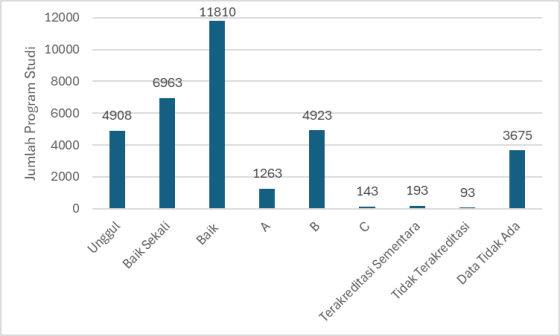
Source : Higher Education Statistics, processed
The evaluation of study programs to strengthen the relevance of graduates should be supported on the condition that they do not stop at the logic of the short-term job market. Entrusting the burden of fully educated unemployment on the campus is a structural mistake that ignores the side of the job market that is not ready to absorb. Higher education reform will be meaningless without bold macroeconomic steps, such as accelerating high-value-added industrialization, strengthening the investment and entrepreneurial climate to create quality formal jobs, and labor regulations that respect competence. Without job creation, the closure of study programs only moves problems—not solves them.
References
Acemoglu, D., & Restrepo, P. (2019). Automation and new tasks: How technology displaces and reinstates labor. Journal of Economic Perspectives, 33(2), 3–30. https://doi.org/10.1257/jep.33.2.3
Al Fardi, M. I. (2026, April 27). UMY asks the Ministry of Higher Education to clarify the plan to close the study program: Don’t just follow the trend. detikJogja. https://www.detik.com/jogja/jogja-kerta/d-8464207/umy-minta-kemdikti-perjelas-rencana-penutupan-prodi-jangan-hanya-ikut-tren
ANTARA News. (2026, April 28). BRIN: The plan to close the study program must be accompanied by curriculum transformation. https://www.antaranews.com/berita/5545671/brin-rencana-penutupan-prodi-harus-disertai-transformasi-kurikulum
Central Statistics Agency. (t.t.-a). Average wages/net salaries per month of workers/employees/employees by province and main employment in 17 sectors (rupiah). Retrieved May 17, 2026, from https://www.bps.go.id/id/statistics-table/2/MjQ3NSMy/rata-rata-upah-gaji-bersih-sebulan-buruh-karyawan-pegawai-menurut-provinsi-dan-lapangan-pekerjaan-utama-di-17-sektor–rupiah-.html
Central Statistics Agency. (t.t.-b). The open unemployment rate is based on education level. Retrieved May 17, 2026, from https://www.bps.go.id/id/statistics-table/2/MTE3OSMy/unemployment-rate-by-education-level.html
Central Statistics Agency. (2025). Education statistics 2025. https://www.bps.go.id/id/publication/2025/11/21/d048070f37740b0e04d99350/statistik-pendidikan-2025.html
CNN Indonesia. (2026, May 7). The Ministry of Education and Science revealed that only 6 percent of universities have ‘superior’ status. https://www.cnnindonesia.com/nasional/20260506225941-20-1355960/kemendiktisaintek-ungkap-hanya-6-persen-universitas-status-unggul
el-Saha, M. I. (2026, April 26). Responding to the discourse of closing study programs is irrelevant to industrialization. Ministry of Religion of the Republic of Indonesia. https://kemenag.go.id/opini/merespons-wacana-penutupan-prodi-tak-relevan-dengan-industrialisasi-IoCXu
GoodStats. (2026). The state of employment in Indonesia February 2026. https://goodstats.id/publication/keadaan-ketenagakerjaan-indonesia-februari-2026-PshPP
Hanri, M., & Sholihah, N. K. (2025a, November). Reading the signs of despair in the Indonesian job market: Labor market brief November 2025. LPEM FEB UI. https://lpem.org/membaca-sinyal-putus-asa-di-pasar-kerja-indonesia-labor-market-brief-november-2025/
Hanri, M., & Sholihah, N. K. (2025b, October). Unemployment is down, but is the job market really okay? Labor market brief October 2025. LPEM FEB UI. https://lpem.org/pengangguran-turun-tapi-apakah-pasar-kerja-benar-benar-baik-baik-saja-labor-market-brief-oktober-2025/
BIC Education Info. (2025, December 28). Bachelor’s degree is no longer a guarantee: Educated unemployment has reached 5.18%, Gen Z is caught in the “experience trap”. https://infopendidikan.bic.id/pengangguran-terdidik-2025-jebakan-pengalaman-skill-mismatch/
Irfani, F. (2026, April 29). The polemic behind the plan to abolish the department is not “relevant” to the interests of the industry. BBC News Indonesia. https://www.bbc.com/indonesia/articles/cn0w04ngrz0o
Ministry of Education. (2025). Higher education statistics 2025. https://www.kemdiktisaintek.go.id/library/book/statistik-pendidikan-tinggi-2025
Coverage6. (2026, April 28). Ministry of Education and Literacy opens its voice! Irrelevant study programs to be closed & the fate of students | GOING VIRAL [Video]. YouTube. https://youtu.be/jpC3CYUsPy4
Lucretie, A. (2025, November 15). Vertical mismatch: 35.36% of Indonesian youth work not according to their level of education. Coils. https://kumparan.com/kumparanbisnis/vertical-mismatch-35-36-pemuda-ri-bekerja-tidak-sesuai-tingkat-pendidikan-26EG46aE7bO/1
Indonesian media. (2026, April 30). Discourse on the Closing of the Study Program. https://mediaindonesia.com/opini/885068/wacana-penutupan-program-studi
Nurhakim, A. (2022, August 4). What is the Tri Dharma of college? Understand the following purpose and meaning! Quipper Blog. https://www.quipper.com/id/blog/quipper-campus/campus-life/n-tri-dharma-perguruan-tinggi/
PDDikti. (2024). Statistics. Ministry of Higher Education, Science, and Technology of the Republic of Indonesia. Retrieved May 17, 2026, from https://pddikti.kemdiktisaintek.go.id/statistik
Prabowo, A. E., Wahjoedi, Utomo, S. H., & Haryono, A. (2021). Evaluation of link and match policies in private universities in Indonesia in terms of the workplace of graduates. Journal of Higher Education Theory and Practice, 21(15). https://doi.org/10.33423/jhetp.v21i15.4896
Rosa, N. (2026, April 27). The Ministry of Education wants to abolish irrelevant industrial study programs, DPR: There must be a study! secondsEdu. https://www.detik.com/edu/perguruan-tinggi/d-8463804/kemendikti-mau-hapus-prodi-tidak-relevan-industri-dpr-harus-ada-kajiannya
Tempodotco. (2026, April 29). What is the impact of the closure of study programs on students and campuses[Video]. YouTube. https://youtu.be/d7rJIBNfuE8
Teresia, D. M., Hastuti, D. R. D., Rahim, A., Astuty, S., & Rajab, A. (2025). The impact of economic factors on educated unemployment. Journal of E-Bis, 9(2), 1094–1113. https://doi.org/10.37339/e-bis.v9i2.2707